
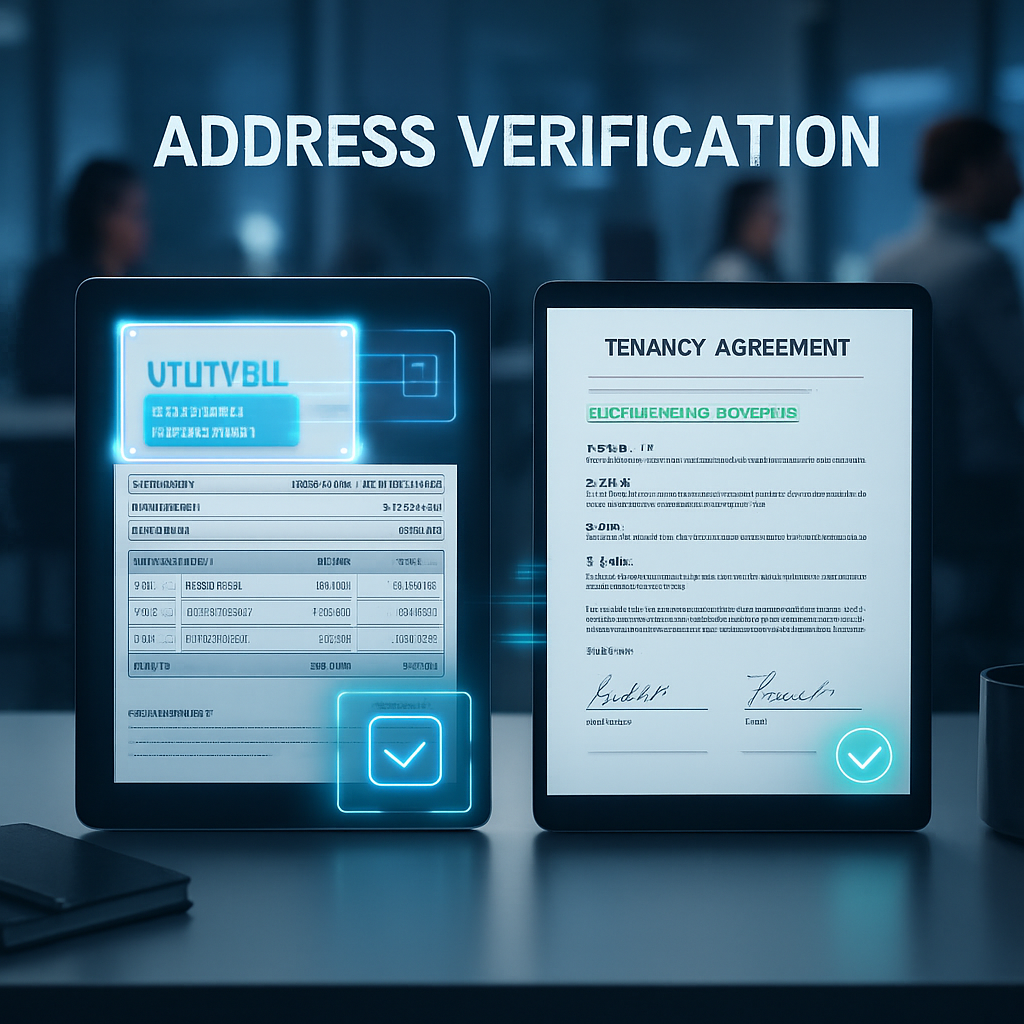
Choosing between a utility bill and a tenancy agreement template can significantly impact the clarity and professionalism of your address proof documents. Accurate, well-designed templates ensure faster edits, consistent formatting, and clean exports, which are essential for creating reliable-looking documents like utility bill as proof of address or tenancy agreements. Understanding the utility bill vs tenancy agreement distinction helps streamline your workflow, especially when precise details and layout authenticity matter.
This article explores the specific roles each document plays, why utility bills are generally preferred for address verification purposes, and how automated systems favor their standardized formats. You’ll also learn best practices for selecting and customizing templates that reflect real-world document features, enhancing usability across projects. Let’s dive into the key differences, legal aspects, and template design tips to optimize your approach to address verification documents.
These templates are intended for design practice, mockups, and film props; they are not substitutes for official documents.
Understanding the differences between utility bills and tenancy agreements is crucial when selecting the right address proof document. This article clarifies their roles, reliability, and why utility bills are generally favored for verification.
- Define each document’s role clearly: Utility bills provide current proof of residency, while tenancy agreements outline rental terms and payment responsibilities.
- Assess reliability for address verification: Utility bills have standardized formats and frequent updates, making them more trusted by automated verification systems.
- Recognize legal responsibilities: Tenancy agreements specify who is responsible for utility payments but are less direct proofs of residency status.
- Understand system preferences: Automated identity and address verification platforms favor utility bills due to their consistency and easier validation.
- Consider alternatives and complements: Other documents may also prove residence, but utility bills remain a primary choice for most verifications.
- Hidden insight—payment details matter: While tenancy agreements note payment duties, the actual utility bill’s presence and current date secure greater trustworthiness.
- Use appropriate templates wisely: Choose utility bill or tenancy agreement templates that reflect real-world layouts to ensure clarity and ease of use.
Next, the article will guide you through practical template features, layout best practices, and how to optimize these documents for professional uses and presentations. These templates are designed for educational and design purposes only and should not be used as substitutes for official verification documents.
Defining Utility Bills and Tenancy Agreements
At the core of address verification documents are utility bills and tenancy agreements, each serving distinct roles in residential documentation. Utility bills are issued by service providers, listing billing details tied to an address, making them a direct reflection of current habitation.
Utility Bill as Proof of Residence
Utility bills function as straightforward proof because they link a resident to an address through regular charges for essential services such as electricity, gas, or water. Their recurring nature means the information is often updated monthly or quarterly, demonstrating active residency.
Role of Tenancy Agreements in Rental Arrangements
Tenancy agreements, contrastingly, are contractual documents enumerating the rental terms between landlord and tenant. While they define financial and usage responsibilities over a specific period, they are less definitive as proof of ongoing residence since tenancy does not always equate to current occupancy.
Understanding these core differences helps set the stage for choosing the most reliable document types for address verification.
Reliability of Documents for Address Verification
Why Utility Bills Are Generally Preferred
Utility bills gain preference in verification workflows mainly due to their standardized presentation and the timely update of data. These attributes facilitate faster, more accurate processing across automated and manual reviews.
- Standardized format: Communication and billing standards in utilities promote a consistent document structure, easing recognition by both humans and verification software.
- Regular updates: Frequent billing cycles ensure that the resident’s information is current, minimizing the risk of outdated or irrelevant data.
Limitations of Tenancy Agreements as Proof
Despite detailing rental terms and occupant obligations, tenancy agreements face challenges as proof of current residence:
- They can be static documents signed at lease inception without reflecting interim changes.
- Their formats vary widely, complicating automated parsing efforts.
- The document confirms rental rights but not necessarily physical occupancy.
If seeking to prepare accurate address-proof documentation, consider leveraging editable utility bill templates tailored for global applications that prioritize clarity and compliance.
This transition into practical reliability brings us to the detailed responsibilities outlined in tenancy agreements.
Legal Responsibilities Highlighted in Tenancy Agreements
Tenancy agreements typically clarify which party is responsible for paying utilities, an important consideration when interpreting financial documents for address proof. However, it’s crucial to remember this legal specificity does not automatically translate to recognizing the tenant’s physical presence at the property.
- Assigned utility payments: Agreements outline whether the landlord or tenant assumes responsibility for utility charges.
- Financial obligations vs. residency: Even if a tenant pays utilities, this alone doesn’t confirm they reside at the address full-time.
Recognizing these nuances aids in setting expectations when using tenancy agreements within verification processes.
Moving from legal terms to system processing, the next stage considers how automated verification platforms treat these documents.
Automated Systems and Document Verification Preferences
System Favoritism Toward Utility Bills
Verification systems typically favor utility bills due to their predictability and rich data sets. These bills include structured tables listing services, payment dates, and outstanding amounts—elements conducive to automated extraction and validation.
Challenges Faced with Verifying Tenancy Agreements
By contrast, tenancy agreements exist in numerous formats, often handwritten or scanned copies with variable quality. This broad heterogeneity diminishes the efficiency of OCR (Optical Character Recognition) and rule-based verifiers.
To enhance verification speed and accuracy, consider adopting a versatile editable utility bill template available in Word and PDF, optimized for compatibility with verification workflows.
Complementing these primary documents, additional address proofs also play a role.
Alternatives and Complementary Address Verification Documents
While utility bills dominate, alternatives like bank statements and official government correspondence also serve as accepted proofs of residence. Their inclusion extends flexibility, especially where utility bills might be unavailable.
- Bank statements: Display recent transactions linked to an address but may vary in update frequency.
- Government letters: Such as tax notifications or electoral roll confirmations, carry authoritative weight.
- Editable address proof documents: Template-based solutions allow tailored applications adapting to diverse verification scenarios.
After understanding various document types, the next step is optimizing templates to appear professional and credible.
Optimizing Templates for Professional Use
Key Features of Effective Utility Bill Templates
When crafting or selecting a utility bill template, prioritize the following features to enhance legitimacy and readability:
- Realistic layout: Mimic the typical arrangement of billing components—header, account details, service period, usage tables, and total charges.
- Accurate date and payment details: Include logical billing cycles and payment statuses consistent with genuine utility documentation.
Best Practices for Tenancy Agreement Templates
For tenancy agreements, clarity ensures ease of understanding:
- Clear rental terms: Itemize tenant and landlord responsibilities, rental duration, and payment schedules cleanly.
- Consistent formatting: Use uniform fonts and structured paragraphs to minimize ambiguity.
Employ editable tenancy agreement templates to maintain standardization and professionalism within your documentation projects.
Given the sensitivities surrounding such documents, adherence to legal and ethical guidelines is paramount.
Legal & Ethical Use
- Templates are intended for educational, design mock-up, and film prop applications only, ensuring compliance with applicable laws.
- They cannot substitute official verification or legal documents required by authorities or institutions.
- Users must employ templates responsibly to prevent misrepresentation and avoid unlawful activities.
Conclusion
Understanding the distinct roles and characteristics of utility bills and tenancy agreements is essential for creating reliable address verification documents. Utility bills stand out for their standardized format, frequent updates, and system-friendly data structure, making them generally more effective for demonstrating current residency. In contrast, tenancy agreements provide valuable legal context but often lack the immediacy and consistency required to confirm ongoing occupancy.
Leveraging editable document templates designed with clarity, realistic layouts, and locale-specific details streamlines the preparation process. These templates enable users to maintain professional-quality documents that support efficiency across automated and manual workflows, helping reduce errors and processing times.
As address verification demands evolve, prioritizing adaptable, well-structured templates—such as those available for utility bills and tenancy agreements—will be critical for sustaining accuracy and productivity. Users are encouraged to approach template use responsibly, emphasizing ethical applications and continual refinement to meet diverse verification challenges.